
Designing for the Evolving Family: From Teens to Toddlers
by Haus of Blaylock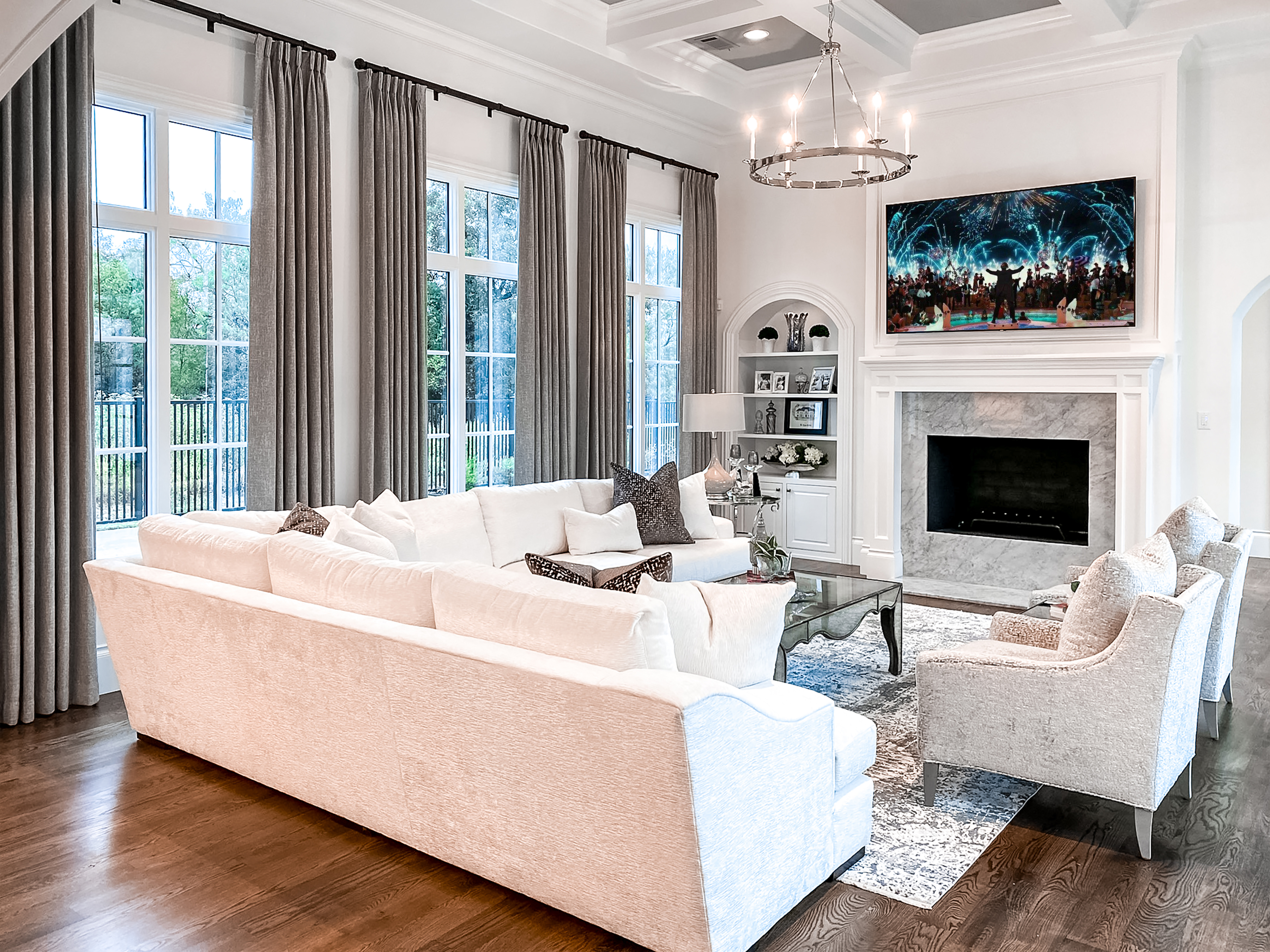
If you’ve ever hesitated on a white sofa because of a toddler, or wondered whether a “nice” living room and an actual lived-in family room can coexist, you’re asking exactly the right question. The families we work with aren’t choosing between beautiful and functional. They just haven’t been shown that a room can be both.
Family life doesn’t hold still. A nursery becomes a playroom becomes a homework station becomes, eventually, a guest room. The best-designed homes aren’t decorated for a single moment in time: they’re built to move with a family as it grows, without a full redo every few years.
Here’s how we think about designing for real, evolving families.
Durable Doesn’t Mean Dull
This is the myth we spend time debunking. “Kid-friendly” and “pet-friendly” get treated like code words for compromise: slipcovers, plastic bins, furniture you’re almost afraid to actually enjoy. It doesn’t have to be that way.
The real secret is material selection, not style sacrifice:
- Smart color choices aren’t about avoiding white altogether; they’re about being intentional with where white shows up versus where a warmer, more forgiving tone does the heavier lifting.
- Performance fabrics have come a long way. Many of today’s high-end options resist stains, scrubbing, and general chaos while still feeling soft and looking genuinely luxurious, not like a vinyl tablecloth.
- Durable, honest materials, like natural stone, quality leathers that age well, and tightly woven rugs or the right rug composition for high-traffic spots, tend to hold up better over time than delicate finishes, and they often look better with a little wear.
Luxury Isn’t Something You Pause Until the Kids Move Out
There’s a quiet assumption a lot of families carry into this process: that a truly elevated, elegant home is something you get to later, once the kids are older, once the dog isn’t shedding on everything, once life calms down. We think that’s backwards. The families who wait usually end up waiting a decade or more, and that’s a long time to live in a home that feels like a placeholder.
A genuinely luxurious family home isn’t a showroom with a “no touching” policy. It’s a home where the elegance is built into the decisions, not dependent on everyone in the house behaving like a museum patron. That distinction shows up in a few specific ways:
- Layering, not minimalism. A room with rich texture, think a great rug, layered lighting, meaningful art, and upholstery with real depth, reads as luxurious even with toys on the floor or a dog on the sofa, because the eye is drawn to the quality of what’s there, not the absence of mess.
- Statement pieces in the right places. The pieces that carry the most visual weight, like a stunning dining table, a sculptural light fixture, or a beautifully upholstered headboard, can live in lower-traffic, more protected areas, while high-traffic family zones lean on materials built for real life.
- Educated durability, not blanket durability. Luxury isn’t automatically synonymous with tough, and a cashmere throw or a viscose rug proves that easily. Part of our job is telling you upfront which pieces need a little more care: a rug pad here, a fabric guard there, the right cleaning approach for a viscose weave versus a wool one. That way, you know what you’re taking on before you fall in love with something, not after.
The goal isn’t a home divided into “the nice part” and “the kid part.” It’s one cohesive, elevated home that happens to also hold up to the family living in it.
Design for the Age You’re At: With an Eye on What’s Next
A toddler-proof home and a teenager’s dream hangout space have very different needs, but a good design plan anticipates the transition instead of getting blindsided by it.
For younger kids, that often looks like:
- Rounded edges on key furniture pieces in high-traffic areas
- Storage that’s actually usable at a child’s height, not just decorative
- Play spaces integrated into main living areas so parents aren’t isolated from their kids all day
For teens, priorities shift:
- Private, personalized spaces that reflect who they’re becoming, not who they were at five
- Durable but more sophisticated finishes as the “everything gets destroyed” phase eases
- Flexible furniture arrangements that support friends coming over, not just family time
The families who avoid a total redo every few years are usually the ones who built in flexibility from the start: furniture that can be reupholstered rather than replaced, layouts that can shift function without shifting structure, and finishes chosen for longevity rather than a single life stage.ation or year-round living. It’s no surprise that this approach is a hallmark of Seaside Florida design and other luxury developments along 30A.
The Whole Family, Including the Four-Legged Members
Pets deserve real design consideration too, not an afterthought corner with a dog bed that clashes with everything else in the room. Built-in feeding stations, durable flooring in high-traffic zones, and fabrics that can handle claws and shedding all belong in the initial design conversation, not a patch added later.
A Home That Grows Up With You
The families we love working with most are the ones in the thick of it: full houses, full schedules, a genuine mix of ages and needs under one roof. Designing for that reality isn’t a limitation; it’s actually one of the more interesting design challenges there is. A beautifully designed family home should never feel like it’s off-limits to the family living in it.
Ready for a home that works as hard as your family does? Let’s talk about a design plan that grows with you.